You know, I’ve been running around construction sites all year, getting my hands dirty with materials, and talking to engineers. Lately, everyone’s buzzing about these new high-performance cable carrier track systems. Seems like every factory I visit is trying to upgrade. Honestly, it's a good thing – things were getting pretty rough with the old stuff. But… there’s a lot of hype, and a lot of places are getting tripped up on the details.
It’s not just about slapping something together that looks strong. It’s about understanding how it’ll actually behave in the field, day in and day out. Believe me, I've seen it all.
I mean, these things aren’t glamorous. They’re the backbone of any automated system, but nobody really sees them until something goes wrong. Then everyone’s screaming.
Industry Trends and Common Pitfalls in Cable Carrier Track Design
To be honest, the biggest trend right now is miniaturization. Everything's getting smaller, faster, and more complex. Which means the cable carrier track needs to be able to handle more cables in a tighter space. Seems simple, right? Wrong. A lot of companies are trying to cram too much into too little, leading to premature wear and tear. I saw a disaster at a robotics factory last month, a whole line went down because the carrier was overloaded.
Another thing I've noticed is a push for lighter-weight materials. Everyone wants to reduce weight, but you can't sacrifice strength and durability. You end up with something that looks good on paper but falls apart after a few months. It's a balancing act, you know?
Materials Matter: Beyond the Spec Sheet
People get too caught up in the datasheets. "Oh, this is made of reinforced nylon!" Okay, great. But how does it feel? Does it have that brittle snap to it, or does it have some give? Have you noticed some of these plastics smell really strong, even after they're installed? It’s… unsettling. I’ve worked with high-density polyethylene – that stuff’s tough, smells a bit like nothing, and can take a beating. Then there’s the stainless steel options, which are fantastic for corrosive environments, but incredibly heavy and expensive. And don’t even get me started on the different types of glides and slides... a cheap glide can ruin a whole system.
Seriously, you gotta get your hands dirty. I spent an hour last week just smelling different polymers at a supplier’s warehouse. My colleagues thought I was crazy, but I could tell the quality just by the scent. It sounds ridiculous, but experience teaches you these things.
The material choice isn’t just about the carrier itself, it’s about compatibility with the cables. You don’t want the carrier material degrading the cable insulation, or vice versa.
Real-World Testing: It's Not Just About Lab Results
Lab tests are fine, but they’re not the real world. I encountered this at a packaging factory last time. They had all sorts of certifications for their cable carrier track, but it couldn’t handle the vibrations from the machinery. It started cracking within a week. Strangely enough, a simpler, less-certified system from a different supplier held up much better.
What we do is simulate the actual operating conditions. We mount the carrier on a test rig, run it at the same speed and acceleration as the machine it’s going on, and see how it holds up. We also subject it to temperature fluctuations, dust, and even occasional splashes of oil and water. Basically, we try to break it in every way possible.
The important thing is to test with the actual cables that will be used in the application. Different cables have different weights and flexibilities, which can affect the performance of the carrier.
How Cable Carrier Track is Actually Used on Site
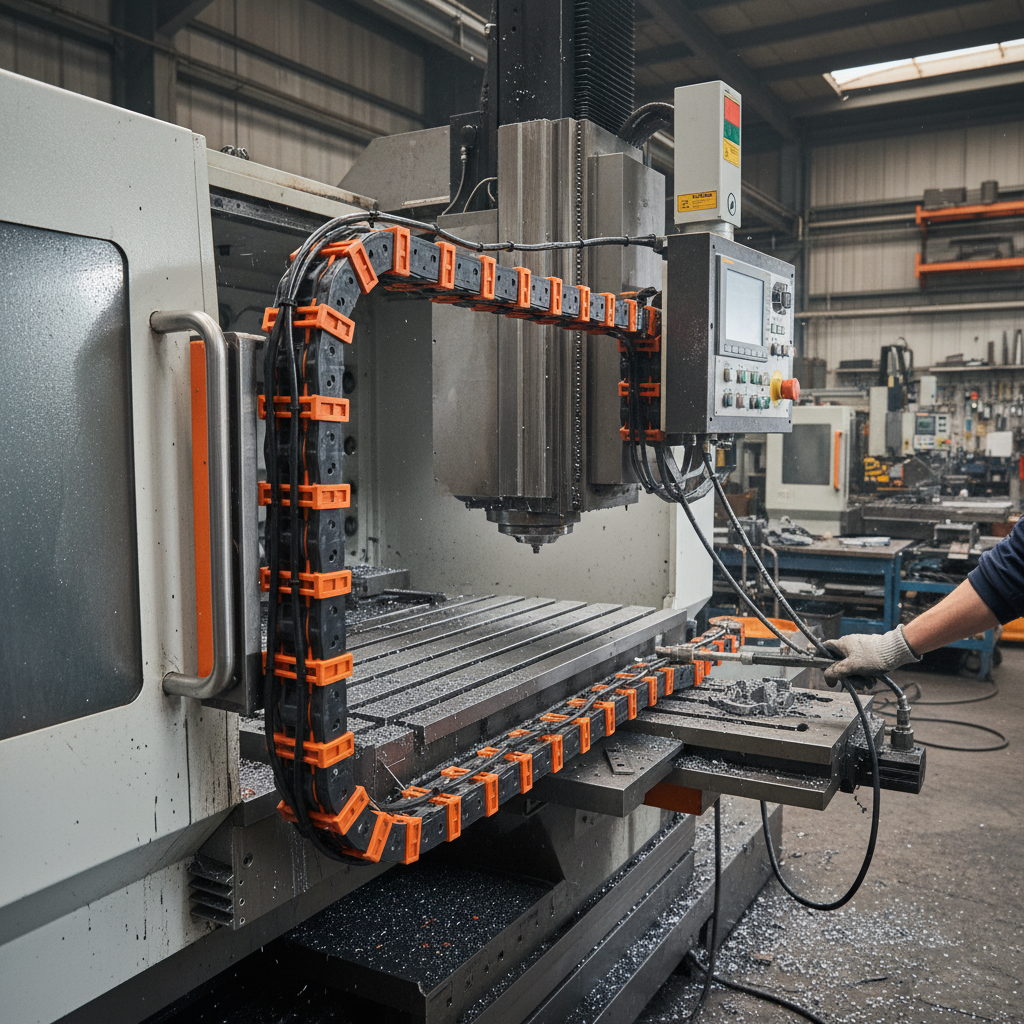
It's funny, you design these things with a specific application in mind, but users always find ways to repurpose them. I’ve seen cable carrier track used for everything from supporting pneumatic hoses to carrying small parts. It’s a testament to their versatility, but it also means you need to account for unexpected loads and stresses.
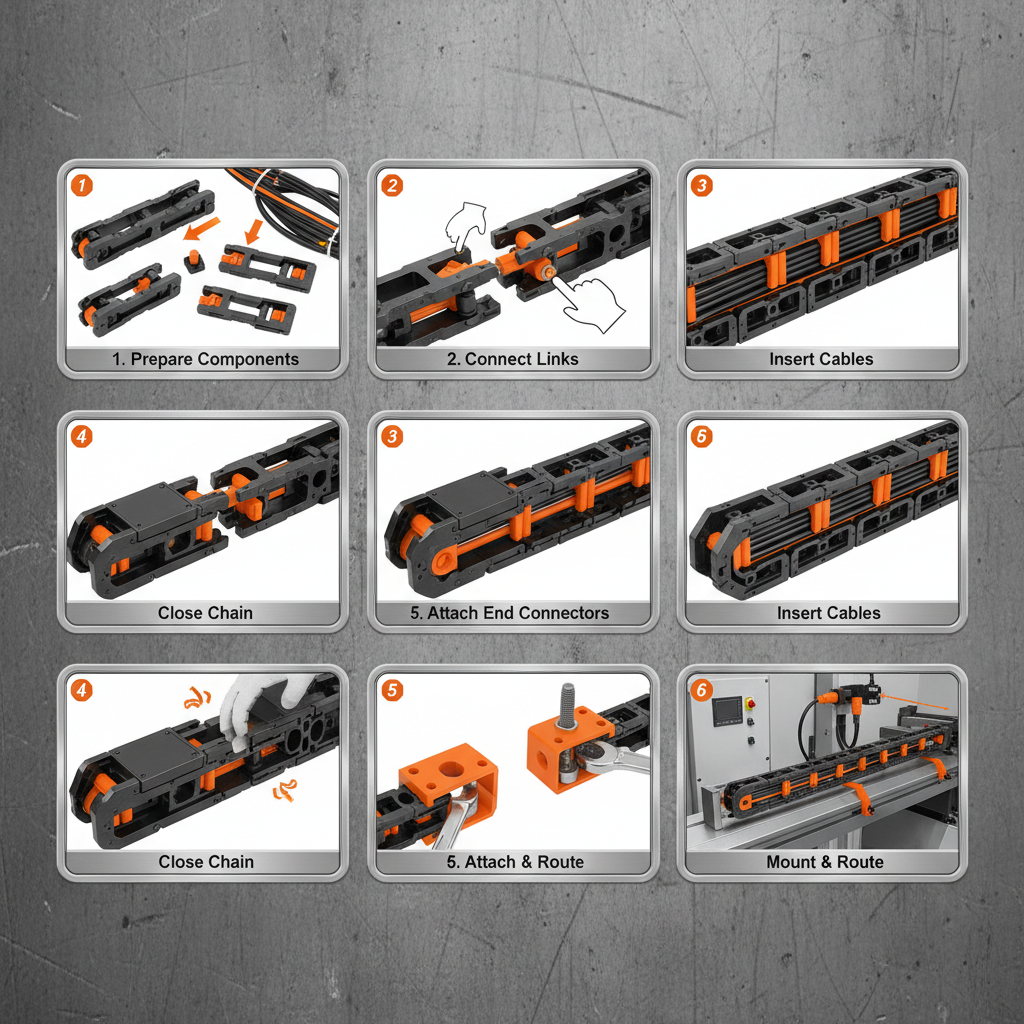
Sometimes, people try to modify the carrier themselves, which is almost always a bad idea. They’ll drill holes in the wrong places, use the wrong fasteners, and end up weakening the whole structure. I always tell them, "Don't mess with it unless you know what you're doing."
Cable Carrier Track Performance Metrics
The Upsides, Downsides, and Customization Options of Cable Carrier Track
The biggest advantage, obviously, is protection. These things keep your cables organized, prevent damage, and extend their lifespan. They also improve safety by reducing the risk of tangled wires. Anyway, I think the reduced downtime is huge; fixing a broken cable is a pain, and it shuts down your whole operation.
The downside? Cost. Good cable carrier track isn’t cheap. And they can be a pain to install, especially in tight spaces. But you get what you pay for, right?
A Customer Story: The Interface Debacle
Last month, that small boss in Shenzhen who makes smart home devices insisted on changing the interface to . He wanted to future-proof his product, which, okay, fair enough. But he also demanded a super-flexible cable carrier track to accommodate the tighter bend radius of the cable. We warned him that the smaller carrier would be less robust, but he wouldn't listen. The result? The carrier failed after just a few thousand cycles, and he had to recall the entire batch. It cost him a fortune and a lot of headaches. Later… forget it, I won’t mention it.
It just goes to show you that sometimes, sticking with what works is the best approach. Don’t chase the latest trends if they compromise reliability.
You have to listen to the people on the ground – the guys who are actually installing and maintaining this stuff. They know what works and what doesn’t.
Key Performance Indicators for Cable Carrier Track Selection
We’ve been tracking performance data for years now, trying to figure out what really matters. It’s more than just tensile strength and load capacity. It’s about how the carrier behaves over time, under real-world conditions.
We look at things like cycle life, resistance to abrasion, and the ability to withstand temperature extremes. We also track failure rates and downtime. It’s a lot of data, but it helps us make informed recommendations.
Ultimately, it comes down to minimizing total cost of ownership. A cheaper carrier might save you money upfront, but if it fails frequently, you’ll end up spending more in the long run.
Key Performance Indicators for Cable Carrier Track Selection
| KPI Category |
Metric |
Measurement Unit |
Acceptable Range |
| Durability |
Cycle Life |
Cycles |
> 1,000,000 |
| Reliability |
Mean Time Between Failures (MTBF) |
Hours |
> 5,000 |
| Environmental Resistance |
Operating Temperature Range |
°C |
-20 to +80 |
| Load Capacity |
Maximum Bending Moment |
Nm |
> 10 |
| Flexibility |
Minimum Bend Radius |
mm |
|
| Cost-Effectiveness |
Cost per Meter |
USD |
|
FAQS
Honestly, it’s underestimating the dynamic forces involved. People often focus solely on the static load, forgetting about the acceleration, deceleration, and vibrations. This leads to premature failure. You’ve got to factor in the complete motion profile, including jerk and shock loads. It’s also easy to get caught up in the marketing hype and choose a carrier that looks good on paper but isn’t suitable for the application. Always double-check the specifications and consider the operating environment.
Critically important! The glide links are what allow the carrier to flex and move smoothly. If they’re made of cheap plastic, they’ll wear out quickly and cause friction, leading to increased wear on the cables and the carrier itself. Look for glides made of high-quality, low-friction materials like polyurethane or nylon. Also, consider the glide's design. Some glides are better suited for high-speed applications than others. A good glide should move silently and without binding.
Condensation is a real issue, especially in environments with fluctuating temperatures. The best approach is to prevent it in the first place by ensuring the carrier is properly sealed. If condensation does occur, you can try using a desiccant inside the carrier to absorb the moisture. You can also add breather holes with filters to allow air circulation without letting in contaminants. But honestly, proper sealing is the key.
You need to calculate the total cross-sectional area of all the cables and hoses that will be running through the carrier. Then, you need to choose a carrier that has at least 30% more space than that. It’s better to err on the side of caution and go with a larger carrier. Remember to also consider the bend radius of the cables and hoses. Too tight a bend radius can damage the cables. Most manufacturers have sizing charts available to help you.
Definitely. We're seeing a lot of innovation in lightweight materials, like carbon fiber reinforced polymers. These materials offer excellent strength-to-weight ratios. There's also a trend towards modular carriers that can be easily customized and reconfigured. And, of course, the integration of sensors and diagnostics is becoming more common. These sensors can monitor the condition of the carrier and provide early warning of potential failures. It's getting more complicated, that's for sure.
Absolutely. Most manufacturers offer customization options, such as different sizes, materials, and mounting configurations. I had a customer last year who needed a carrier with a specific opening pattern to accommodate a custom cable assembly. We worked with the manufacturer to design and build a carrier that met their exact requirements. It wasn’t cheap, but it solved their problem. Customization can also involve adding features like integrated cable clamps or shielding.
Conclusion
So, what does it all boil down to? Cable carrier track, at its core, is about protecting your cables and ensuring reliable operation. It’s about choosing the right materials, designing for the real-world conditions, and paying attention to the details. Don’t get caught up in the hype; focus on what matters most – durability, reliability, and cost-effectiveness.
Ultimately, whether this thing works or not, the worker will know the moment he tightens the screw. If it feels solid, it probably is. If it feels flimsy, you've got a problem. That’s just how it is.

 FIND USHIGH-TECH ZONE
 CALL US TODAY
 EMAIL US NOW