-
 FIND USHIGH-TECH ZONE
-
 CALL US TODAY
-
 EMAIL US NOW
The integration of high-precision motion control in CNC machinery has intensified the demand for specialized cable management solutions. In modern automated manufacturing, the reliability of a cable carrier manufacturing company is measured not just by the strength of the materials, but by the carrier's ability to maintain cable integrity during millions of reciprocating cycles.
Mechanical fatigue and cable abrasion remain the primary causes of downtime in CNC workstations. When cables are subjected to constant bending and torsion, the choice of carrier geometry and material composition becomes the critical factor in preventing signal loss and electrical failure. The industry is currently shifting toward reinforced nylon architectures that balance flexibility with structural rigidity.
This analysis explores the technical engineering behind bridge-type nylon cable chains, focusing on the MTK series' architectural advantages. By examining material specifications and deployment logic, we provide a framework for selecting the optimal protection system for high-duty industrial environments.


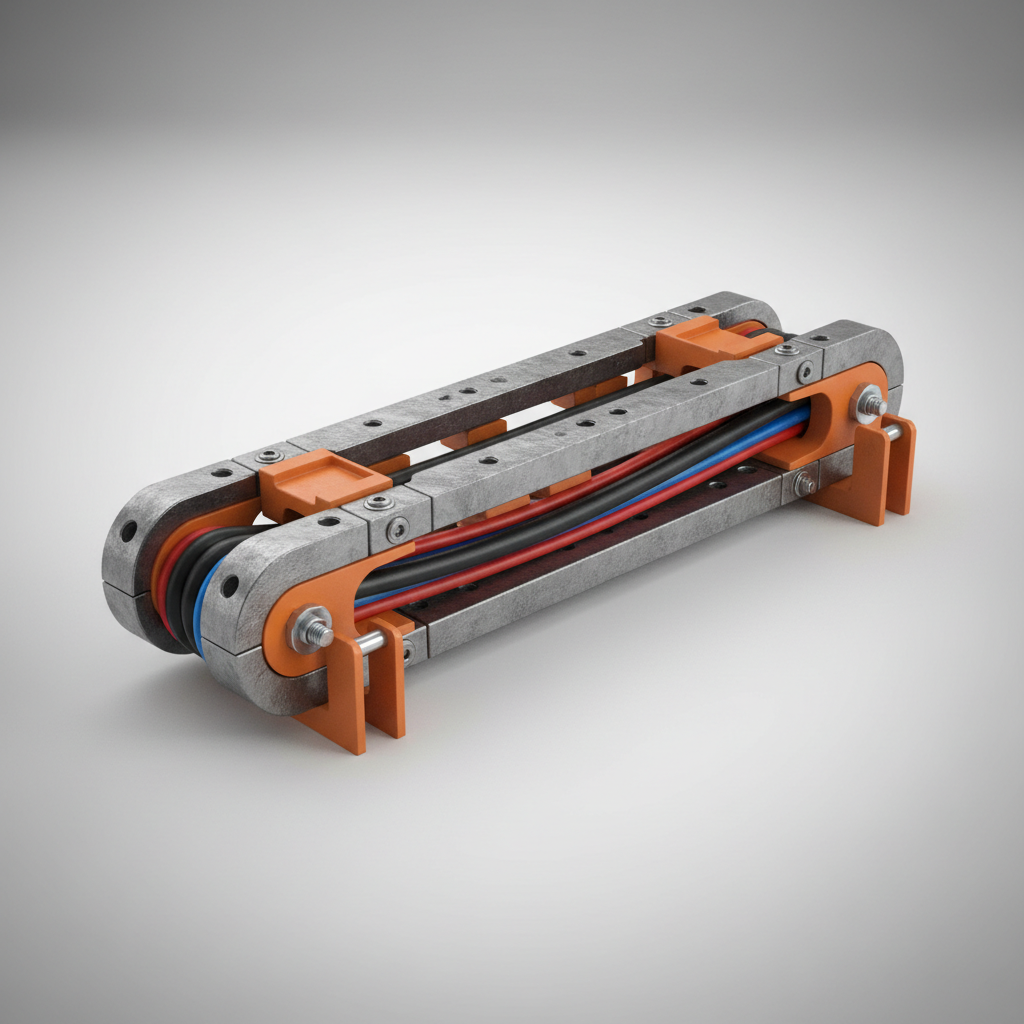
The bridge-type architecture, exemplified by the MTK series, utilizes a stable link structure reinforced with colored pins on the sides. Unlike standard chains, the bridge design is specifically engineered for CNC applications where stability during high-speed movement is paramount.
This structure minimizes the "windage" effect and prevents the chain from twisting during rapid acceleration, ensuring that the internal cables maintain a consistent bending radius.
The use of reinforced Nylon PA6 and PA66 is central to the performance of industrial cable carriers. These materials are chosen for their high mechanical strength and resistance to wear. A critical distinction in production is the use of original new nylon raw materials; recycled materials, while cheaper, exhibit significantly weaker physical performance and are prone to premature cracking under stress.
PA66 generally offers superior thermal stability, which is essential for machines operating in environments ranging from -40 to 130 ℃. This temperature range ensures that the carrier does not become brittle in cold climates or deform under the heat generated by high-frequency reciprocating motion.
Furthermore, the self-lubricating properties of reinforced nylon reduce friction between the links, extending the operational life of the chain and reducing the need for external lubricants that could attract industrial dust and debris.
Engineering a cable carrier requires a precise balance between internal dimensions and the bending radius. If the radius is too tight, the cables suffer from excessive stress; if too wide, the system occupies unnecessary space in the machine frame.
Additionally, the structural stability of the bridge type ensures that the carrier remains "wearable" and "elastic," meaning it can absorb minor mechanical misalignments without compromising the protection of the internal conduit.
When evaluating different series, engineers must look at the trade-off between weight and structural rigidity. The MTK series provides a specific weight-to-strength ratio that is optimized for CNC applications.
The following data represents a normalized engineering assessment across different configuration profiles, evaluating their suitability for high-speed vs. high-load scenarios.
In a typical deployment scenario, the MTK series is integrated into the X or Y axis of a CNC milling machine. The installation requires a precise alignment of the guide rail to ensure that the chain doesn't experience lateral stress, which could lead to premature pin wear.
Integration with existing cable harnesses should prioritize the separation of power and signal cables within the carrier to prevent electromagnetic interference (EMI), utilizing the internal space provided by larger dimensions like the 3075 mm configuration.
The lifecycle of a cable chain is dictated by the quality of the mould structure and the raw material. Modern manufacturing emphasizes iterative improvement based on customer usage feedback, modifying the pin-and-socket interface to reduce friction.
Maintenance for nylon carriers is relatively simple compared to steel alternatives, as they do not require frequent greasing. However, regular inspection for "stress whitening"—a visual indicator of material fatigue—is recommended to predict the end-of-life before a catastrophic break occurs.
Future directions in carrier technology are moving toward "smart carriers" with embedded sensors to monitor wear in real-time, although the current mechanical reliability of reinforced PA66 remains the industry benchmark for most B2B applications.
Choosing the correct carrier requires matching the internal dimensions to the total cable volume and the bending radius to the available machine clearance.
The table below outlines various configuration profiles to assist engineers in the selection process, distinguishing between standard and precision-driven requirements.
Verification of the operating temperature and the gap ratio is essential to ensure the selected profile matches the actual environmental constraints.
| Configuration Profile | Material/Build | Operating Factor | Recommended Use Case |
|---|---|---|---|
| Basic Profile | Standard PA6 | Low Velocity | General Conveying |
| Standard Profile | Reinforced PA66 | Medium Duty | Industrial Automation |
| High-Duty Profile | High-Grade PA66 | Heavy Cycle | Heavy Machinery |
| Precision Profile | Toleranced PA66 | High Precision | CNC Milling/Turning |
| Automated Profile | Low Friction PA | High Speed | Rapid Pick-and-Place |
| Industry Baseline | Generic Nylon | Variable | Basic Protection |
The bending radius determines the minimum curve the chain can form without stressing the internal cables. A radius that is too small increases the tension on the cable conductors and insulation, leading to premature fatigue failure. In the MTK series, selecting a radius (e.g., R55 to R200) must be based on the minimum bending radius specified by the cable manufacturer to ensure the system's overall lifespan.
Reinforced PA66 utilizes original raw materials that maintain consistent molecular chain length, providing superior tensile strength and impact resistance. Recycled nylon often contains impurities and degraded polymer chains, which result in a significant loss of physical performance, making the carrier more susceptible to cracking and deformation, especially under thermal stress or high-load reciprocating motion.
Yes, provided the material is PA66, which typically supports working temperatures from -40 to 130 ℃. However, it is important to note that at the upper limits of this range, the material's elasticity may change. Engineers should verify if the specific application involves exposure to corrosive chemicals or oils, as these can affect the nylon's integrity over time, regardless of the temperature.
The recommended gap (typically 10%) is the empty space left within the carrier's inner dimensions. This space prevents cables from being squeezed or crushed as the chain bends. Without this gap, cables are forced against each other and the carrier walls, creating friction and heat that can melt the cable jackets or cause internal wire breakage during continuous movement.
High-quality carriers exhibit smooth surface finishes without molding flash or burrs. Check the consistency of the pin fitment; pins should be secure but allow smooth rotation. Additionally, a "snap" test of a sample link should reveal a resilient, non-brittle break. Authentic reinforced nylon will also have a consistent color and a slight matte finish, unlike the glossy, inconsistent appearance of low-grade recycled plastics.
Yes, professional manufacturers can develop new moulds for special requirements. This is often necessary when standard sizes (like the MTK range) do not fit the specific spatial constraints of a custom CNC machine. Customization usually involves specifying the inner height, width, and a custom bending radius to optimize the cable path and machine footprint.
The transition toward higher automation speeds in the machining industry necessitates a shift from generic cable protection to engineered management systems. The evidence suggests that prioritizing original reinforced PA66 materials and adhering to the 10% gap rule significantly reduces the risk of unplanned downtime.
For procurement and engineering teams, the practical implication is clear: the total cost of ownership is lower when investing in a high-stability bridge-type system. By sourcing from a specialized cable carrier manufacturing company, operators can ensure that their cable management is a catalyst for productivity rather than a point of failure.