-
 FIND USHIGH-TECH ZONE
-
 CALL US TODAY
-
 EMAIL US NOW
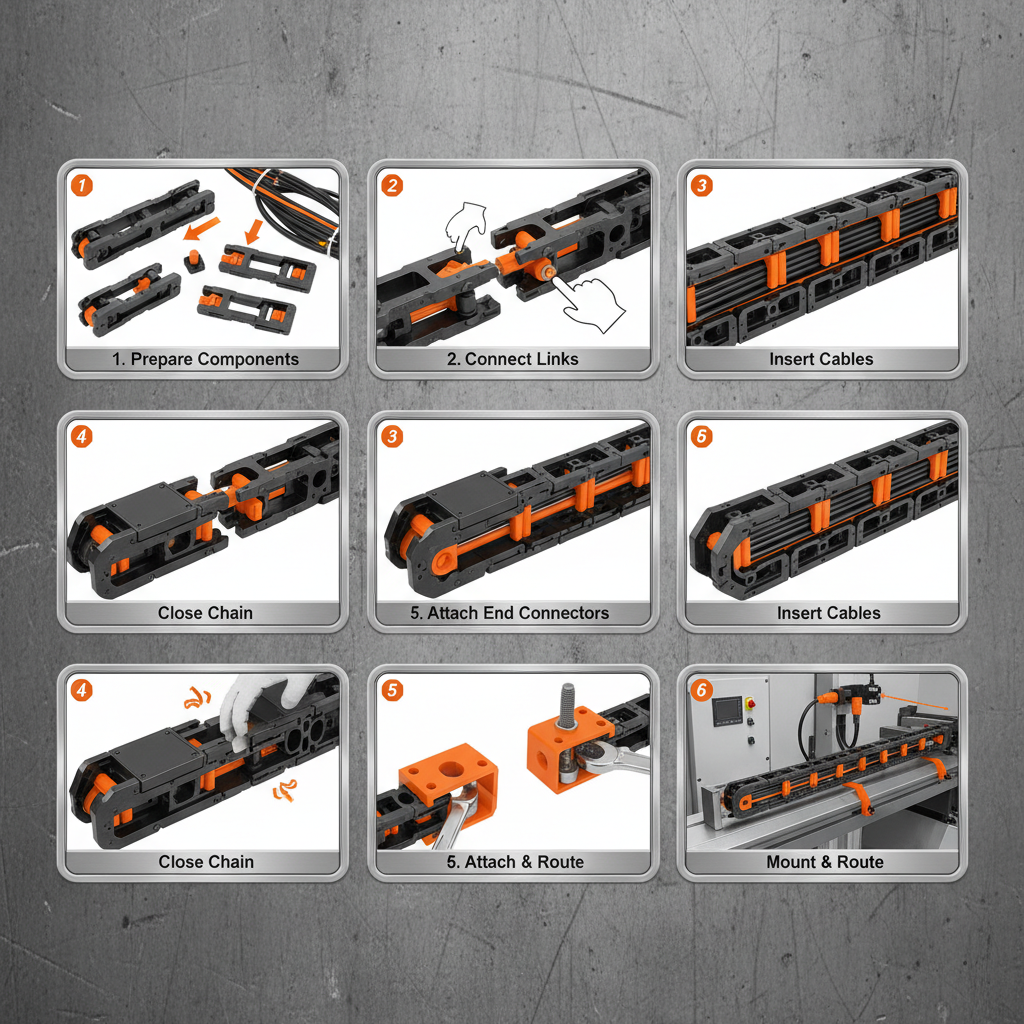
The failure of a single cable carrier in a high-speed reciprocating system can bring an entire production line to a standstill. For engineers managing complex machinery, the priority is rarely just finding a part, but ensuring the long-term structural integrity of the cable guidance system.
Selecting the right partner among various cable drag chain suppliers requires a technical understanding of material fatigue, bending radii, and environmental stressors. It is no longer about a simple purchase; it is about integrating a component that minimizes downtime and extends the service life of critical power and data lines.
This analysis examines the technical criteria for selecting industrial cable carriers, the impact of raw material purity on physical performance, and how to evaluate the operational viability of different series based on specific mechanical requirements.


The physical performance of a cable drag chain is fundamentally tied to the purity of its polymer base. Industrial-grade Reinforced Nylon (PA6, PA66) is the standard for most mechanical applications due to its balance of elasticity and wear resistance. However, a critical distinction exists between the use of original new nylon raw materials and recycled alternatives.
Recycled materials, while cost-effective, often exhibit inconsistent molecular weights and impurities that lead to premature stress cracking and reduced fire resistance. In contrast, original PA66 provides stable physical properties across a working temperature range of -40 to 130 ℃, ensuring that the chain remains self-lubricating and wearable under high-frequency cycles.
The bending radius (R) is perhaps the most critical dimension in cable carrier design. It dictates the minimum curve the chain can take without putting excessive tension on the enclosed cables. A radius that is too tight causes cable fatigue, while one that is too large requires more installation space and can lead to instability during high-speed travel.
Most standard series, such as the SK series, offer a range of radii (e.g., R55 to R150) to match the minimum bending radius of the cables being protected. Engineers must calculate the internal clearance, typically allowing for a 10% gap, to prevent the cables from rubbing against the inner walls of the carrier during movement.
Furthermore, the pitch of the chain and the height-to-width ratio influence the overall weight and rigidity. For example, an SK35 series chain with a 35100mm inner dimension requires a specific radius to ensure the "inward side of bending" remains stable, preventing the chain from twisting or "popping" during operation.
Different series of cable carriers are optimized for different mechanical loads and spatial constraints. The MT, MTK, and MTS series provide various scaling options from as small as 5mm5mm up to 60mm300mm, allowing for precise matching between the carrier size and the cable bundle diameter.
The core trade-off in cable carrier selection lies between structural rigidity and weight. While enclosed types offer maximum protection against external debris, bridge types allow for easier installation and maintenance of the internal cables.
When evaluating these series, manufacturers like Shijiazhuang Agile Company emphasize the importance of mold precision. Because cable chains rely on the interlocking of hundreds of identical links, even a millimeter of deviation in the mold can result in uneven wear or failure at the joints after millions of cycles.
To understand the operational efficiency of different carrier types, we can look at a relative performance index. This index considers factors such as wear resistance, installation ease, and environmental adaptability.
For instance, Reinforced Nylon carriers typically score higher in self-lubrication and corrosion resistance compared to basic plastics, making them the preferred choice for environments where traditional lubricants might attract dust and accelerate abrasive wear.
In a typical industrial setting, such as a CNC machining center, the cable drag chain must withstand constant exposure to cooling lubricants and metal chips. Here, the "enclosed type" structure is vital, as it prevents chips from entering the chain links and causing premature mechanical jams.
Conversely, in automated warehouse systems where long-distance reciprocating motion is required, the focus shifts to the total weight of the chain. Utilizing lightweight but high-strength PA66 materials from experienced cable drag chain suppliers reduces the load on the drive motors and lowers energy consumption over millions of cycles.
The industry is moving toward more modular and customizable designs. The ability to create new moulds for special requirements has become a competitive necessity. As machinery becomes more compact, the demand for smaller inner dimensions (like the 10mm6mm range in KJ series) is increasing.
Another trend is the integration of "smart" monitoring, where the physical wear of the nylon links can be predicted based on cycle counts. This shifts the maintenance model from reactive—replacing a chain after it breaks—to predictive, where the chain is replaced based on its calculated fatigue limit.
Furthermore, the shift toward more sustainable manufacturing is forcing a re-evaluation of materials. While original nylon remains the gold standard for performance, the development of high-performance bio-polymers that can match the -40 to 130 ℃ temperature range is an ongoing area of research in the mechanical accessories sector.
When auditing cable drag chain suppliers, procurement officers should look beyond the price per meter. A lower price often indicates the use of recycled nylon or lower-precision moulds, both of which increase the total cost of ownership through frequent replacements and unplanned downtime.
A professional supplier should provide detailed technical data, including the exact material grade (e.g., PA66), the recommended gap (usually 10%), and clear dimensions for height, width, and radius. The presence of a wide variety of existing moulds suggests a capacity for rapid deployment and a deep understanding of diverse industry standards like DIN, ISO, and JIS.
Ultimately, the best choice is a partner that integrates customer feedback into their mould design. Continuous improvement of the link structure based on real-world usage data is the only way to ensure that the product evolves alongside the machinery it protects.
| Evaluation Factor | Standard Nylon | Reinforced PA66 | Recycled Nylon |
|---|---|---|---|
| Temp Range | Moderate | -40 to 130 ℃ | Unstable |
| Wear Resistance | Medium | High (Self-lubricating) | Low |
| Dimensional Stability | Standard | Precision Molded | Variable |
| Cycle Life | Medium | Extended | Short |
| Fire Resistance | Basic | Fire Proof | Low |
| Cost Efficiency | High | Optimized Value | Low Initial Cost |
PA66 generally offers higher mechanical strength, better heat resistance, and superior stiffness compared to PA6. In cable drag chains, PA66 is often preferred for high-load or high-temperature environments because it maintains its structural integrity better under stress, whereas PA6 is slightly more flexible and may be used in applications where extreme rigidity is not required.
The bending radius should be selected based on the minimum bending radius of the cables being housed. Check the cable manufacturer's datasheet; the carrier's radius (R) must be equal to or greater than the cables' minimum bend radius. Additionally, consider the available installation space and the speed of the reciprocating motion to avoid instability.
Original nylon ensures consistent molecular structure and purity. Recycled materials often contain contaminants and degraded polymer chains, which lead to brittleness, lower fatigue resistance, and unpredictable failure points. For industrial machinery, using original materials is a risk-mitigation strategy to prevent catastrophic cable failure and unplanned production halts.
The 10% gap (or fill ratio) is intended to prevent the cables from being compressed or rubbed against the internal walls of the carrier. Cables naturally shift and move during the bending process; providing this clearance ensures that the cables can move freely without friction, which significantly extends the lifespan of the cable jackets.
Choose an enclosed type when the environment contains abrasive dust, metal chips, or chemical splashes that could damage the cables or jam the chain links. Choose a bridge type (open side) for applications where ease of cable installation, ventilation for heat-generating cables, or lower overall weight is the primary requirement.
Quality can be identified by the smoothness of the link joints (no flashing or burrs), the uniformity of the color (indicating pure material), and the precision of the dimensions. Additionally, a reputable supplier will provide detailed technical specifications, adherence to international standards (ISO/DIN), and options for customized moulds to fit specific engineering needs.
The efficiency of industrial automation relies on the smallest components performing flawlessly under the most rigorous conditions. A cable drag chain is not merely a plastic guide but a critical protective system that safeguards the nervous system of a machine.
By prioritizing material purity, calculating precise bending radii, and selecting a supplier committed to mold precision and continuous improvement, companies can significantly reduce their operational risk and maintenance costs.