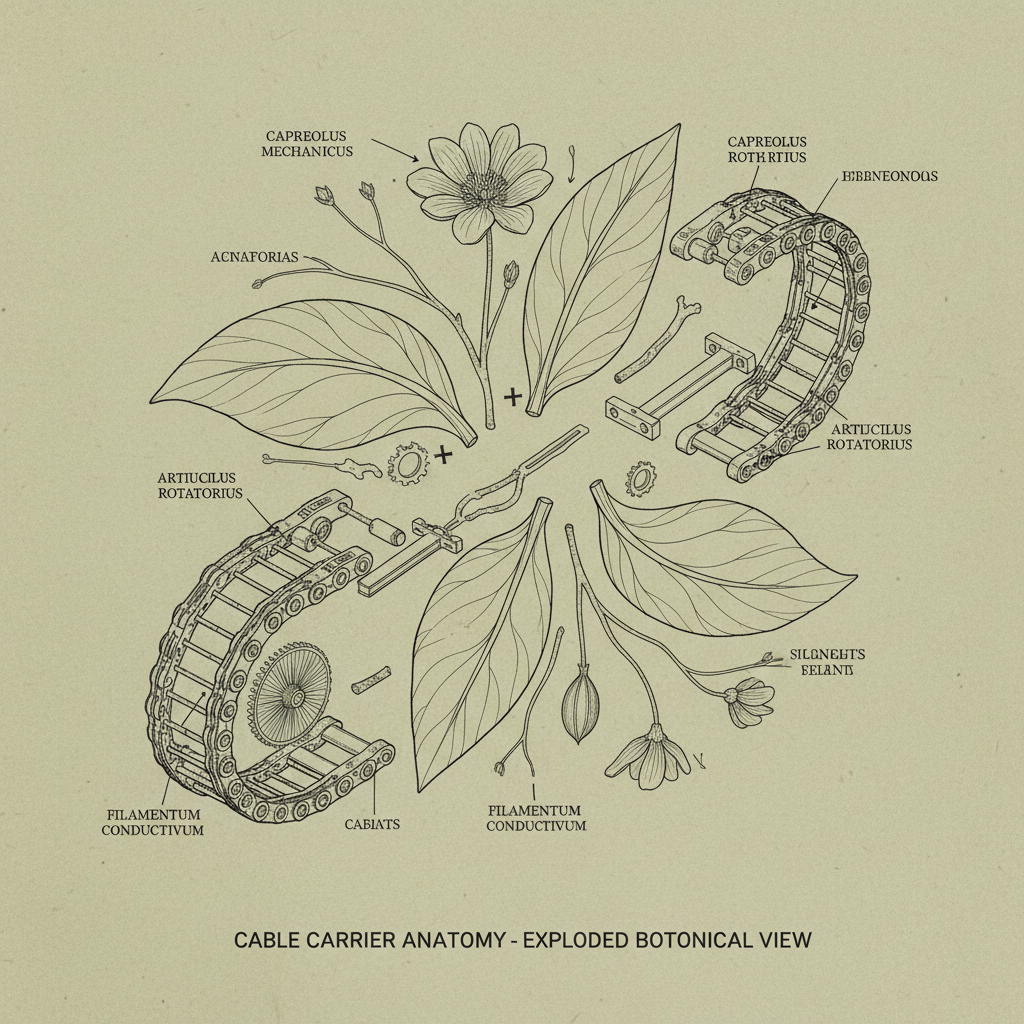


Professional Nylon Cable Carrier Manufacturing Company Solutions
Ensuring the longevity of electrical cables and hydraulic hoses in reciprocating motion environments requires more than just basic shielding; it demands a precision-engineered energy chain system. For engineers facing the challenge of cable fatigue and mechanical wear in CNC machinery or automated production lines, selecting the right protective conduit is critical to preventing costly unplanned downtime. The MTK Series reinforced nylon chains are designed specifically to balance flexibility with structural rigidity, providing a reliable guide for cables moving in complex paths.
As a professional cable carrier manufacturing company, we focus on using original, high-grade nylon raw materials to ensure physical performance remains consistent even under heavy industrial loads. By integrating reinforced PA6 and PA66 polymers, these systems offer superior wear resistance and self-lubricating properties, effectively reducing friction and extending the service life of the internal wiring in demanding manufacturing environments.

Material Engineering and the Advantage of Reinforced PA6/PA66 Polymers
The operational lifespan of a drag chain is primarily determined by its material composition. In the MTK series, the use of reinforced Nylon PA6 and PA66 is not accidental; these materials are selected for their exceptional strength-to-weight ratio and thermal stability. Unlike lower-cost alternatives that utilize recycled plastics, we employ original new nylon raw materials. Recycled materials often contain impurities and have degraded polymer chains, which lead to premature cracking and failure under constant bending cycles.
The physical properties of reinforced PA66 allow the chain to operate in temperatures ranging from -40°C to 130°C, making it suitable for both cold-storage facilities and high-heat machining centers. Key performance characteristics include:
- Self-Lubrication: The inherent properties of the nylon blend reduce the need for external grease, preventing the accumulation of dust and debris.
- Wear Resistance: The reinforced structure prevents the links from wearing down during high-frequency reciprocating motion.
- Elasticity and Fire Proofing: The materials are engineered to be elastic enough to prevent snapping while remaining fire-resistant to meet industrial safety standards.

Engineering Design for Reciprocating Motion and Cable Protection
A well-designed energy chain must manage the internal stress of the cables it protects. The MTK series utilizes an open-side or both-side opening structure, allowing for easy installation and replacement of cables without dismantling the entire assembly. The recommended gap of 10% between the cables and the inner wall of the carrier is essential; this space prevents cables from rubbing against each other, which is the primary cause of insulation failure in automated systems.
Our design philosophy emphasizes functional improvement based on real-world user feedback. By modifying mould structures, we have optimized the pitch and radius of the chains to ensure a smooth transition during bending. This minimizes the "whipping" effect often seen in low-quality carriers, providing a stable and predictable motion path. Whether it is the MTk20, MTk25, or the larger MTK45 series, the structural integrity remains consistent across all dimensions to support a wide variety of cable diameters and quantities.
Industrial Application Scenarios and Selection Logic
Selecting the correct chain requires an analysis of the motion profile and the environmental stressors. In CNC milling machines, where precision is paramount, the MTK series provides the necessary stability to ensure that cable movement does not interfere with the machine's accuracy. In larger conveyor systems or lifting machinery, the reinforced nylon structure offers the durability needed to withstand continuous operation over thousands of cycles.
When choosing a model, procurement managers should consider the following logic:
- Inner Dimension: Calculate the total cross-sectional area of all cables and hoses, then add a 10% safety margin.
- Bending Radius: Ensure the radius matches the minimum bending radius of the most sensitive cable in the bundle.
- Environmental Factors: For applications involving chemical exposure or extreme temperatures, the PA66 reinforced variant is recommended for its superior chemical resistance.
By matching the product specifications to the actual usage condition, companies can significantly reduce the total cost of ownership by avoiding frequent replacements and reducing downtime.
Technical Specifications and Dimensional Matrix
| Series Model | Inner Dimensions (HW) | Outer Dimensions (HW) | Bending Radius |
|---|---|---|---|
| MTk20 (2050) | 20 x 50 mm | 35 x 67 mm | R55 |
| MTk25 (2550) | 25 x 50 mm | 40 x 68 mm | R55/R75/R100 |
| MTK30 (3050) | 30 x 50 mm | 45 x 71 mm | R55/R85/R100 |
| MTK35 (3550) | 35 x 50 mm | 56 x 76 mm | R85/R100/R125 |
| MTK45 (45100) | 45 x 100 mm | 69 x 130 mm | R100/R125/R150 |
Quality Control and Manufacturing Reliability
Quality is the cornerstone of industrial reliability. As a dedicated cable carrier manufacturing company, we implement a strict "Quality First" policy. This begins with the raw material inspection, where every batch of reinforced nylon is tested for physical properties before entering the production line. We explicitly reject low-price requirements that would compromise the integrity of the material, as a failure in a cable chain can lead to catastrophic damage to the cables and the machine itself.
Our production facility in Yanshan county, Hebei province, covers 6500 square meters, allowing for a streamlined flow from mould injection to final assembly. We maintain an extensive library of moulds for various sizes and types, and we possess the capability to develop custom moulds for special industrial requirements. This flexibility ensures that our clients receive a product that fits their specific mechanical layout perfectly, rather than trying to adapt a standard part to a non-standard machine.
Procurement Considerations for Long-Term System Stability
When sourcing cable protection systems, buyers often focus solely on the initial purchase price. However, the real value lies in the operational efficiency and the reduction of maintenance costs. A high-quality nylon chain reduces the frequency of cable replacements and minimizes the risk of signal interference caused by cable friction. When evaluating a supplier, it is essential to verify their commitment to original materials and their ability to provide technical consultation during the selection process.
For optimal results, we recommend a comprehensive review of the installation environment. Factors such as the presence of abrasive dust, the speed of the reciprocating motion, and the total weight of the cable bundle should be discussed with the technical team. By prioritizing quality and service, companies can ensure that their automation systems remain productive and reliable for years to come, effectively solving the problem of cable wear while saving long-term operational costs.
Frequently Asked Questions Regarding Cable Chain Selection
What is the difference between PA6 and PA66 in cable carriers?
PA66 generally offers higher mechanical strength and better heat resistance compared to PA6, making it more suitable for high-temperature industrial environments. Both are reinforced in our MTK series to provide superior wear resistance and stability during constant motion.
How do I determine the correct inner size for my cable chain?
Measure the total height and width of your cable bundle. It is critical to leave a recommended gap of approximately 10% to allow the cables to move freely within the chain, preventing internal friction and premature wear of the cable jackets.
Can these chains be used in extreme cold or hot environments?
Yes, the reinforced nylon materials used in our products are designed to operate in a wide temperature range, from -40°C to 130°C, ensuring they remain flexible in the cold and structurally sound in the heat.
Why should I avoid recycled nylon materials in drag chains?
Recycled materials often have inconsistent physical properties and lower impact strength. This can lead to the chain links snapping or wearing down quickly, which risks damaging the expensive cables inside and causing machine downtime.
What is the benefit of an open-side design?
An open-side design allows for the easy addition or replacement of cables without having to disassemble the entire chain system, significantly reducing maintenance time and labor costs.
Do these chains require regular lubrication?
No, the reinforced nylon PA6/PA66 is self-lubricating, which means it reduces friction naturally. This eliminates the need for external lubricants that often attract dust and grime in a factory setting.
Technical References and Industry Standards
- Guide to Cable Carrier Systems and Design
- ISO Standards for Industrial Plastic Components
- DIN Standards for Mechanical Engineering Components
- ANSI Standards for Industrial Safety and Equipment
If you are looking for a durable and precision-engineered cable protection solution, Shijiazhuang Agile is ready to assist. We combine over 13 years of manufacturing expertise with a commitment to quality and customer-centric service to help you optimize your machinery's performance.
Related Articles