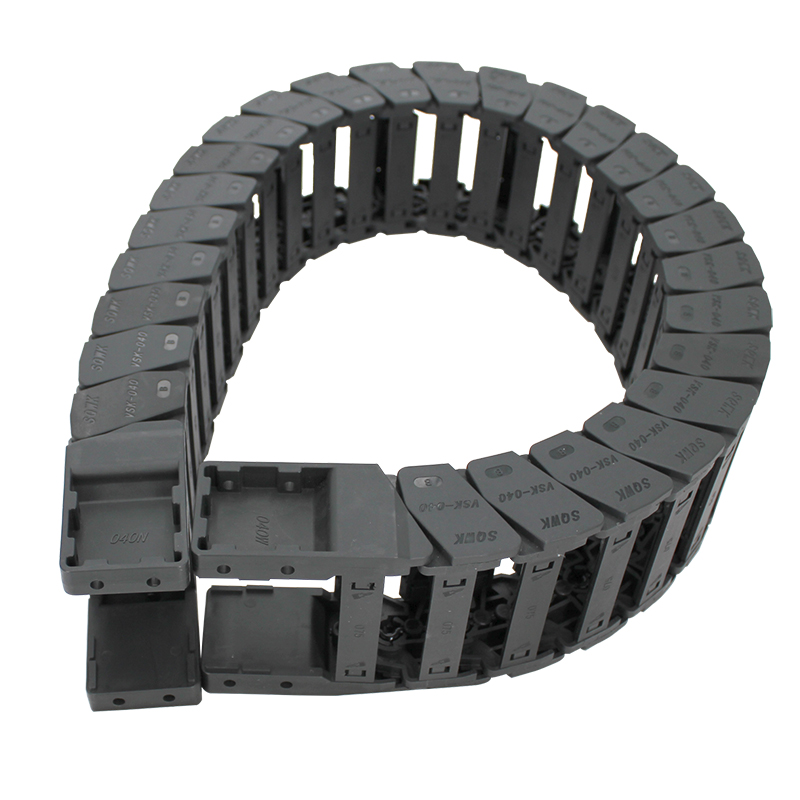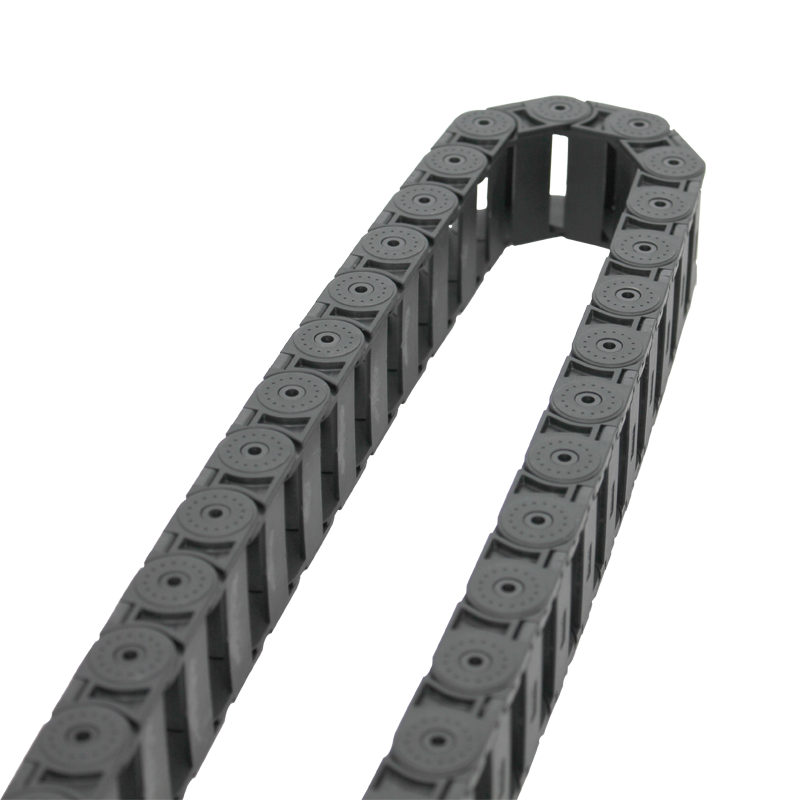


Professional Cable Carrier Manufacturing Company and Solutions
Managing cables and hoses in reciprocating motion environments requires a precise balance of flexibility and structural integrity. For engineers and procurement specialists in the mechanical equipment sector, selecting a reliable cable protection system is critical to preventing downtime caused by cable fatigue or mechanical wear. Reinforced nylon drag chains offer a high-performance alternative to steel, providing a lightweight yet durable solution that handles complex bending radii without compromising internal conduit safety.
Whether applied in CNC machinery, automated assembly lines, or heavy-duty lifting equipment, the effectiveness of a cable carrier depends heavily on material purity and mould precision. By focusing on original new nylon raw materials rather than recycled alternatives, manufacturers can ensure consistent physical performance across diverse operating temperatures. This technical approach prevents premature failure and reduces the total cost of ownership for industrial operators.

Material Engineering and Physical Properties of Reinforced Nylon PA6 and PA66
The performance of a drag chain is fundamentally tied to its chemical composition. Using Reinforced Nylon PA6 and PA66 ensures that the carrier can withstand rigorous industrial environments. Unlike standard plastics, these reinforced polyamides are engineered for high wear resistance and self-lubricating properties, which significantly reduce friction during the constant folding and unfolding of the chain.
A critical differentiator in manufacturing quality is the use of original new nylon raw materials. Many low-cost alternatives utilize recycled plastics, which often suffer from impurities and inconsistent molecular structures, leading to brittleness and unexpected snapping under load. In contrast, virgin PA6/PA66 maintains its elasticity and strength, ensuring that the cable carrier remains reliable even in temperatures ranging from -40°C to 130°C.
- Thermal Stability: Operates effectively in extreme cold and high-heat environments.
- Self-Lubricating: Reduces the need for external lubricants and prevents debris buildup.
- Fire Resistance: Enhanced safety profiles for industrial applications.
- Mechanical Strength: High tensile strength to support heavy cable bundles.

Selecting the Right Drag Chain Configuration for Industrial Applications
Choosing the correct cable carrier requires a detailed analysis of the reciprocating motion's geometry and the specific cables being protected. The inner size (Height x Width) must be calculated to allow a recommended gap of approximately 10%, preventing the cables from being pinched or overly stressed during movement. If the inner dimensions are too tight, cable fatigue accelerates; if they are too loose, cables may shift and rub against the chain walls.
Beyond dimensions, the bending radius (R) and pitch are vital factors. A larger bending radius is typically required for thicker cables to prevent permanent deformation. For specialized machinery, different structures such as bridge types (inside or outside opening) provide easier access for cable installation and maintenance. The ability to customize moulds for special requirements allows for a perfect fit in non-standard machine envelopes, reducing the footprint of the cable management system.
For high-precision CNC machines, the MT Series provides various options from small-scale 5x5mm units to heavy-duty 59x300mm carriers. Selecting a model that matches the specific kinematics of the equipment ensures a smooth transition between the extended and retracted states, minimizing vibration and noise.
Operational Maintenance and Long-term Reliability Strategies
To maximize the lifespan of a nylon cable carrier, an integrated approach to operation and maintenance is required. Because these chains are designed to be wearable, monitoring the links for signs of stress whitening or cracking is essential. However, the use of reinforced PA66 significantly extends the interval between replacements compared to standard nylon products.
Maintenance is streamlined through the use of modular designs. Many high-quality carriers are engineered for easy installation and adjustment. When feedback from the field indicates specific failure points, the mould structures can be modified to improve function—such as adjusting the link connection points to better distribute the load. This iterative improvement process ensures that the product evolves with the actual usage conditions of the end customer.
Key maintenance considerations include:
- Cable Layout: Ensuring cables are not twisted within the chain.
- Alignment: Checking that the guide rails are perfectly parallel to prevent skewed movement.
- Cleanliness: Removing abrasive dust and metal chips that can act as sandpaper on the nylon links.
Technical Specification Matrix for MT Series Cable Carriers
| Series Model | Inner Dimension (HxW) | Bending Radius (R) | Weight (Kg/m) |
|---|---|---|---|
| MT5-12 | 1010 mm | R28 | 0.13 |
| MT15 | 1550 mm | R75 | 0.427 |
| MT18 | 1850 mm | R42 | 0.55 |
| MT30 | 3077 mm | R55 | 1.435 |
| MT60 | 59300 mm | R150 | 5.609 |
Evaluating Manufacturing Standards for Global Procurement
When auditing a cable carrier manufacturing company, procurement managers should prioritize quality control over the lowest possible price. A price point that jeopardizes material purity—such as using recycled nylon—will inevitably lead to higher operational costs due to frequent replacements and unplanned machine downtime. The standard for excellence involves adherence to international norms like DIN, GB, ISO, JIS, and ANSI.
A professional manufacturer demonstrates its capability through its production infrastructure. For example, a facility with a substantial production area (such as 6,500 square meters) and a dedicated team of employees indicates the capacity to handle both large-scale OEM orders and specialized custom mould projects. The integration of sales consultation and after-sales service ensures that the client receives accurate technical information and support throughout the product lifecycle.
Future Trends in Cable Protection and Motion Control
The trend in cable management is shifting toward "smart" protection and extreme environment resilience. As automation moves into more aggressive industries—such as chemical processing or high-heat forging—the demand for materials that can maintain structural integrity at 130°C and above is increasing. We are seeing a move toward more complex bridge-type designs that allow for "hot-swapping" cables without dismantling the entire chain.
Furthermore, there is a growing emphasis on reducing the overall weight of moving parts to increase machine acceleration and reduce energy consumption. Lightweight reinforced nylon continues to outperform steel in these metrics while offering sufficient durability for millions of cycles. Future developments will likely focus on further optimizing the link geometry to reduce noise and friction, making the motion control systems even more efficient.
Technical FAQ: Industrial Cable Carrier Selection
What is the difference between PA6 and PA66 for drag chains?
PA66 generally offers slightly higher mechanical strength and better heat resistance compared to PA6, making it suitable for more demanding industrial environments, while PA6 provides excellent toughness and flexibility.
How do I determine the correct inner size for my cable carrier?
Measure the total cross-sectional area of all cables and hoses. Add a 10% clearance gap to ensure the cables can move freely without being compressed during the bending cycle.
Why should I avoid recycled nylon materials in cable chains?
Recycled materials often have inconsistent physical properties and impurities, which can lead to brittle links and premature failure under repetitive reciprocating motion.
Can these cable carriers be used in temperatures below zero?
Yes, the reinforced nylon materials used in our chains are designed to operate in temperatures as low as -40°C without losing their essential physical properties.
What is a 'bridge type' cable carrier and when should it be used?
A bridge type carrier features an open side or top, allowing cables to be added or removed easily. It is ideal for applications where cables need frequent maintenance or updates.
How do I know when it is time to replace the drag chain?
Inspect for stress whitening of the nylon, visible cracks in the links, or an increase in noise during operation. If the links no longer return to their original shape, replacement is necessary.
Technical Industry References
- ISO Standards for Industrial Plastics
- DIN Specifications for Mechanical Components
- ANSI Engineering Standards
- NIST Materials Science Database
Ensuring the longevity of your machinery depends on the quality of the smallest components. By investing in high-grade reinforced nylon protection systems, you safeguard your critical infrastructure and minimize operational risk.
Related Technical Insights